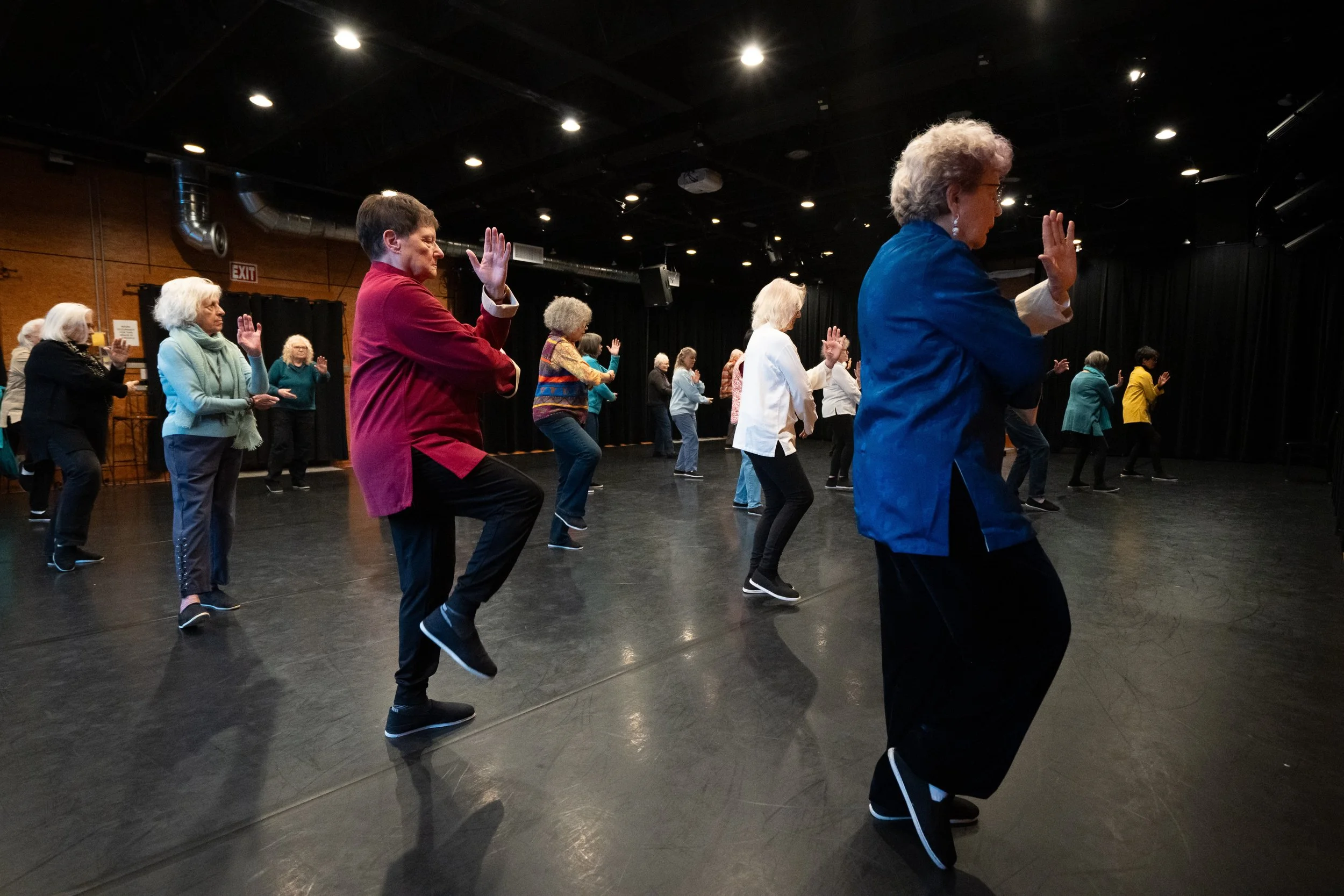
What is T’ai Chi?
Most people are familiar with the symbol for T’ai Chi, the Taiji diagram of interconnecting black and white circles with the opposing dots. This signifies the yin yang of life; the complementary opposites (light – dark; firm -yielding; hot-cold and the harmonizing opposites that together form the whole. This is best represented in the mountain. When we see the mountain, we see part in shadow (the yin), part in light, (the yang) but the mountain is both light and dark. This is relational dualism of T’ai Chi Ch’uan.
A Journey and a Philosophy
T’ai Chi is a journey, not a destination; nor is it simply an exercise of the body. It is a philosophy of living and a pursuit of self-awareness. The journey leads to improved health and wellbeing.
T’ai Chi Ch’uan (pron: Tie Chee Chwan), often written as Taijiquan or in its abbreviated form, T’ai Chi, is an ancient Chinese exercise of mind, body and spirit and the first martial art. T’ai Chi Ch’uan means Ultimate or Supreme boxing or in some translations, Ultimate Supreme Force. T’ai Chi is one of the five components of Chinese medicine with the purpose of preventing illness and restoring health. Of the five styles of T’ai Chi, Chen is the oldest and still practiced today in the Chen Village Henan province in China. However, Yang style, the second oldest style is the most popular and performed world-wide. Its tall stance from the waist, large circular motions and relaxed, soft body is what distinguishes Yang style form other forms.
Over the years, T’ai Chi has lost is favor as a fighting form and is practiced now for its benefits to health and wellbeing. A number of studies suggest that performing T’ai Chi at least three times a week improves balance and boosts the immune system. T’ai Chi is recommended by the Arthritis Foundation and the Parkinson’s disease Foundation for its gentle movements and emphasis on weight shifting and balance. As a weight bearing exercise, it is an excellent strategy for improving bone health and preventing falls. It is calming and relaxing and good for the soul.
T’ai Chi is guided by nature and so many of the names of the postures reflect this- embrace the peacock’s tail, white crane spreads its wings, golden cock stands on one foot, repulse the monkey and many more. It is this imagery that connects the mind, body and spirit as we perform T’a Chi Ch’uan.
Health Benefits
As a weight bearing exercise, T’ai Chi is good for maintaining and improving bone health when performed on a regular basis. With its focus on balance, Tai Chi is recommended to prevent falls among older adults. Although research suggests maximum benefit when practiced one hour a week for six months or three times a week for four months, most students report improvement in balance and overall health and wellbeing with regular study and practice. When a person stops practicing T’ai Chi, the physical benefits slowly disappear over time.
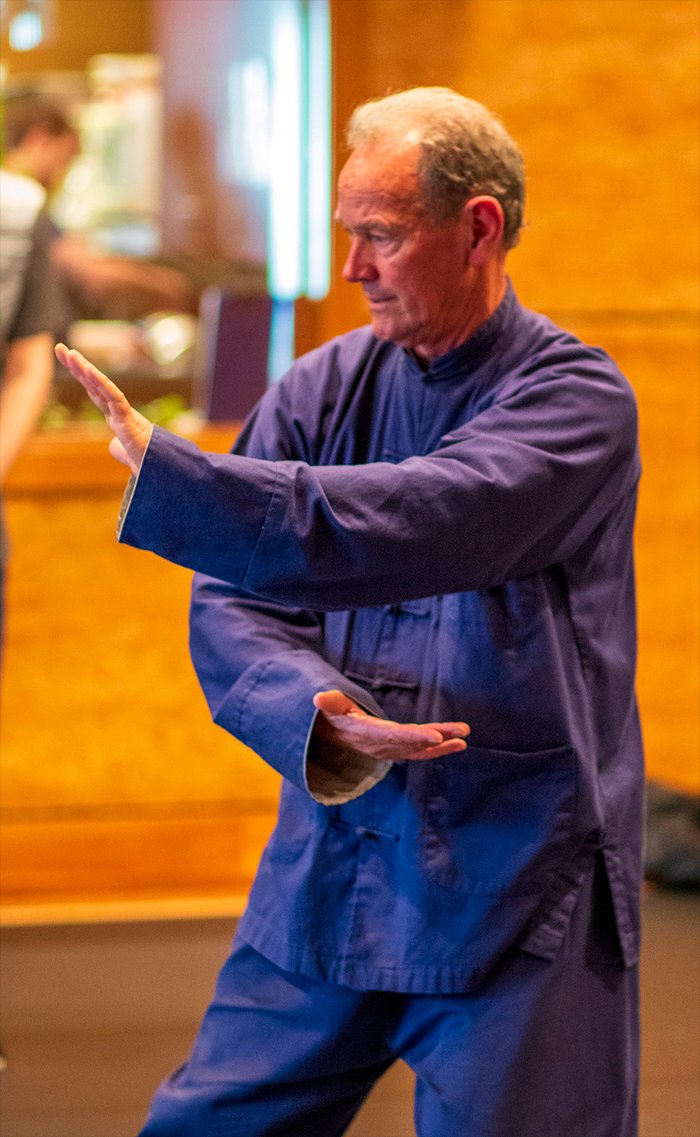
Clifton Gore, 1949 - 2024.
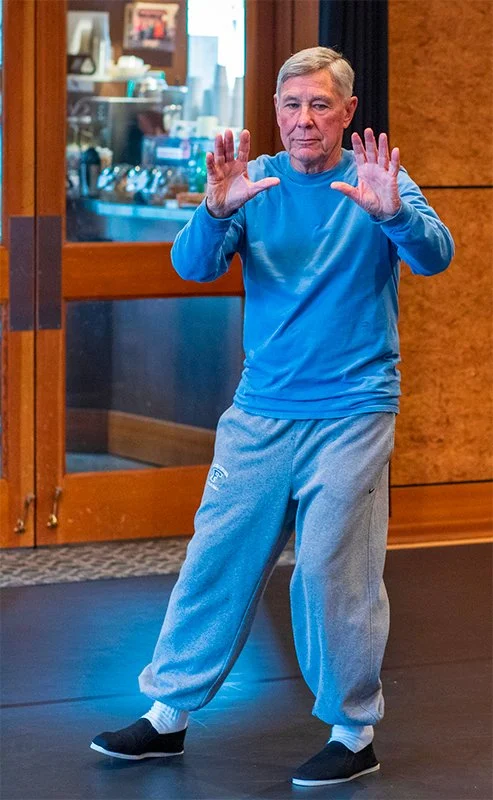
Max, Certified Practitioner.
Principles of T’ai Chi Ch’uan
T’ai Chi Ch’uan is rooted in the feet, controlled by the waist, expressed in the fingers, and based on these principles:
• Slowness (in sync with deep breathing)
• Roundedness (circular motions)
• Rooting (in the feet)
• Smoothness (catch the wind)
• Imagination and visualization
Core Concepts
• Foot placement and walk like a cat
• Stance and posture
• Weight Shifting and balance
• Breathing
• Softness, roundedness, smoothness, continuity
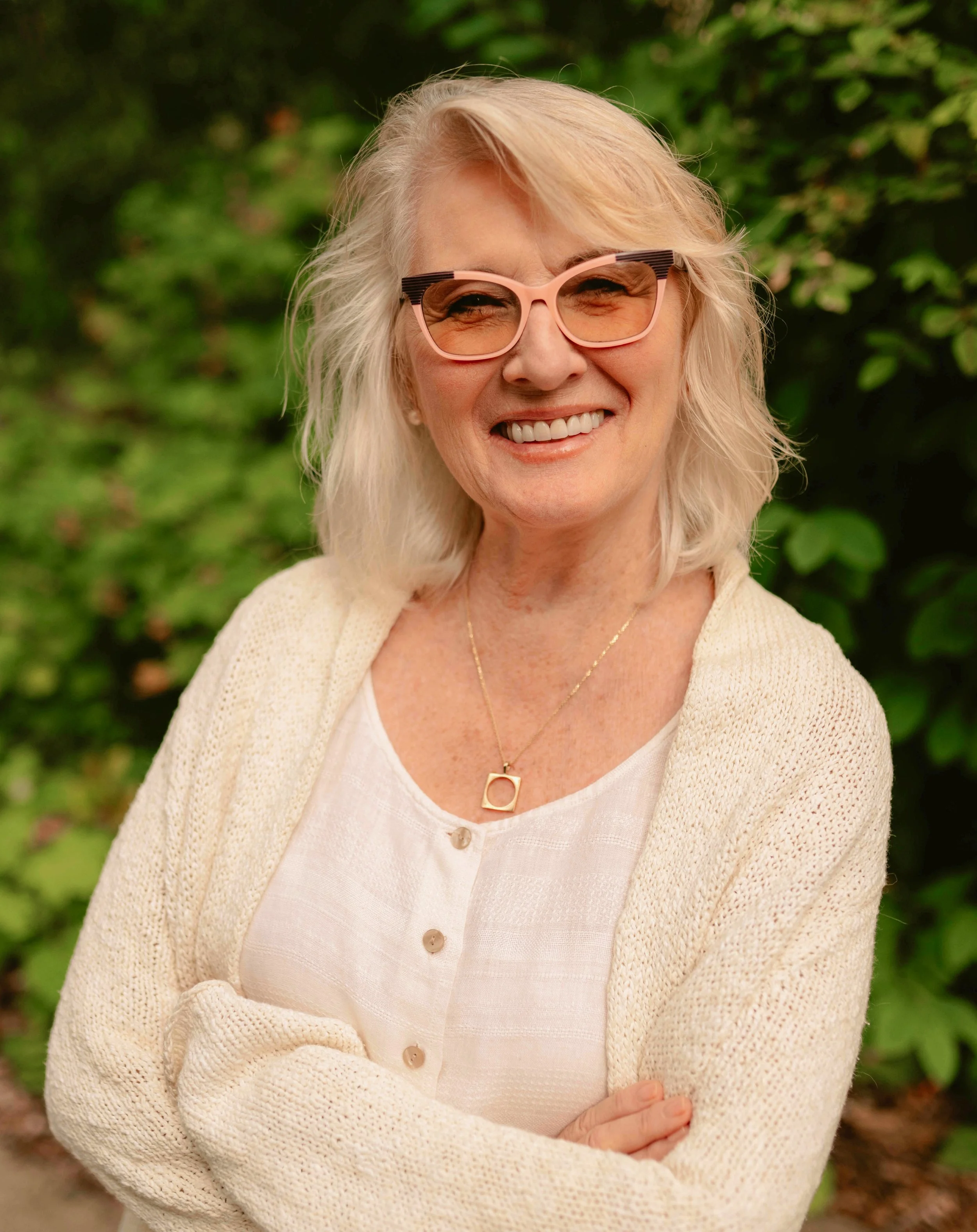
Meet Our Assistant Teachers
Meet Meg Fortune McDonnell
Meg Fortune McDonnell is a Certified Associate Instructor by the American Tai Chi and Qigong Association. Meg is the first of my students to be become a Tai Chi Instructor, and she has a wide range of previous teaching experience. After studying to become a contemporary dance teacher in Seattle, Meg turned to Yoga and meditation. She moved to California, New York, Hawaii, Australia, and Fiji to learn, and then traveled more of the world to teach. When she returned to the PNW and discovered Tai Chi, she quickly became a dedicated practitioner. Meg also holds a Certificate as a Practitioner. Now, Meg brings her experience in Tai Chi, as well as her extensive background in mind-body harmony, to the classes she teaches with Linda at Linda’s Tai Chi. Meg will be teaching the Foundations Beginning class on Monday at 4 PM at Hillcrest starting January 4, 2027
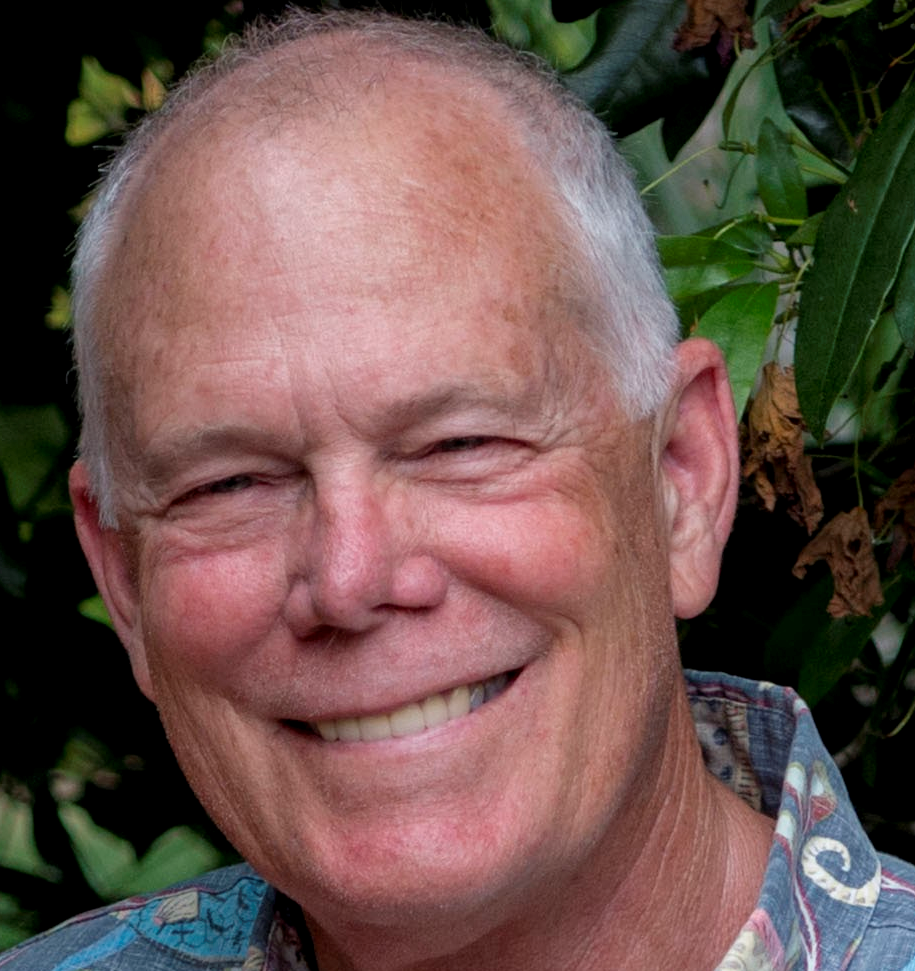
Meet Peter Burkland
Peter Burkland is a retired grandfather who started Tai Chi in 2016 with Linda as one of her first students. He has a professional resume of mentoring and helping people to achieve their goals in a variety of industries. Peter is a devoted student and is a Certified Practitioner. He has developed his skills to the point where he is leading advanced students and assisting with teaching newer students the more advanced portions of the Tung basic set. He is currently working to master the Tung Family Set and Yang 18-form fan. Peter will be teaching the Set 3 transitional class on Monday at 4 PM at Hillcrest starting January 4, 2027
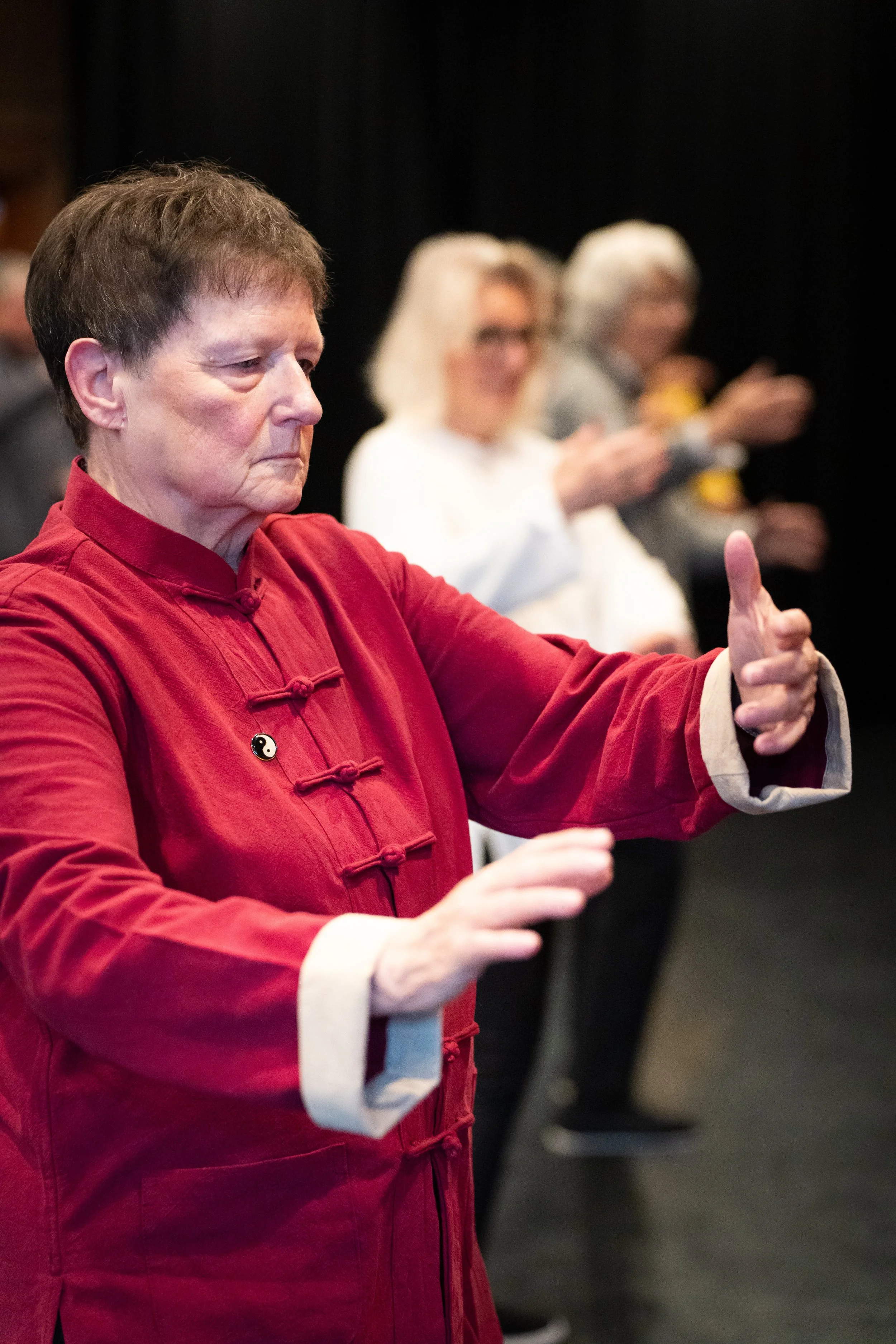
Meet Lois Penick
Lois is a Certified Tai Chi Practitioner recognized by the American Tai Chi and Qigong Association, with a background in early childhood education. A native of eastern Ohio, after graduating from Ohio University, Lois taught elementary school for many years. When her family relocated to Spokane in 1985, Lois operated an Early Learning Center and discovered how much she enjoys 3–5-year-olds. She then taught at a Pre-K School. Lois loves to teach- all ages. She and her husband moved to Bellingham in 2019. Lois found Linda’s Tai Chi in September of 2022 and she never looked back! Under Linda’s guidance, Lois is currently accumulating teaching hours toward becoming an ATCQA-Certified Associate Instructor. Her dedication to Tai Chi and years of teaching experience make her a skilled and patient instructor valued by students at Linda’s Tai Chi.